
Most people think hunting is about sitting in a blind for six hours waiting around in silence.
At Dismal River, that’s not quite the case. Upland bird hunting is active, loud, and fast; you’ll find yourself logging five to ten miles a day sweeping through thick cover, watching dogs work, and reacting in a split second when a bird flushes at your boots.
If you’ve never set foot in a field with a shotgun, here is how a hunt goes down and what you need to know.
Why The Timing Matters Out Here
Look up Nebraska’s public pheasant season, and the calendar says October 31st. Most hunters across the state are stuck waiting for that date.
Dismal River operates under a private Controlled Shooting Area (CSA) permit. That legal distinction means our hunting season opens weeks earlier than public land. You get early access to prime bird cover, milder fall weather, and fresh birds before the late-winter freeze sets in.
What to Expect on Your First Walk
1. The Rhythm of the Line.
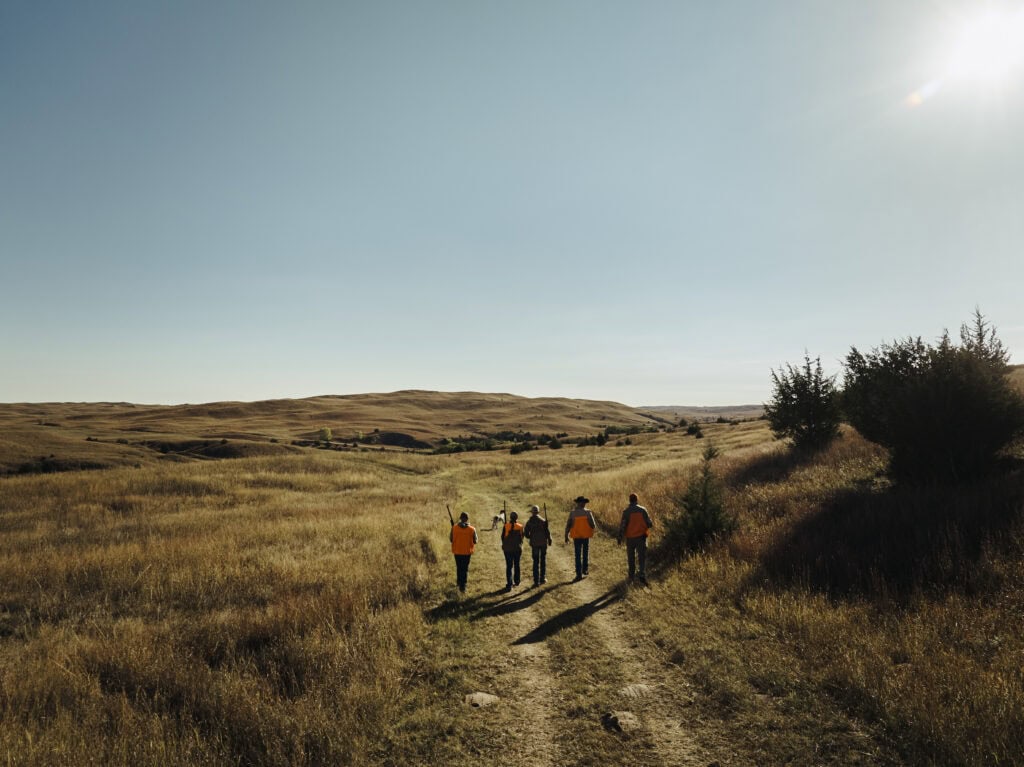
You walk in a spread-out horizontal line through tall native grasses, crop edges, and draw bottoms. The goal is simple: push through the cover together so birds can’t slip back behind you. You keep pace with the line, holding your gun in a safe “ready carry” position with the barrel pointed up, safety on, and finger off the trigger.
2. The Flush Will Startle You.
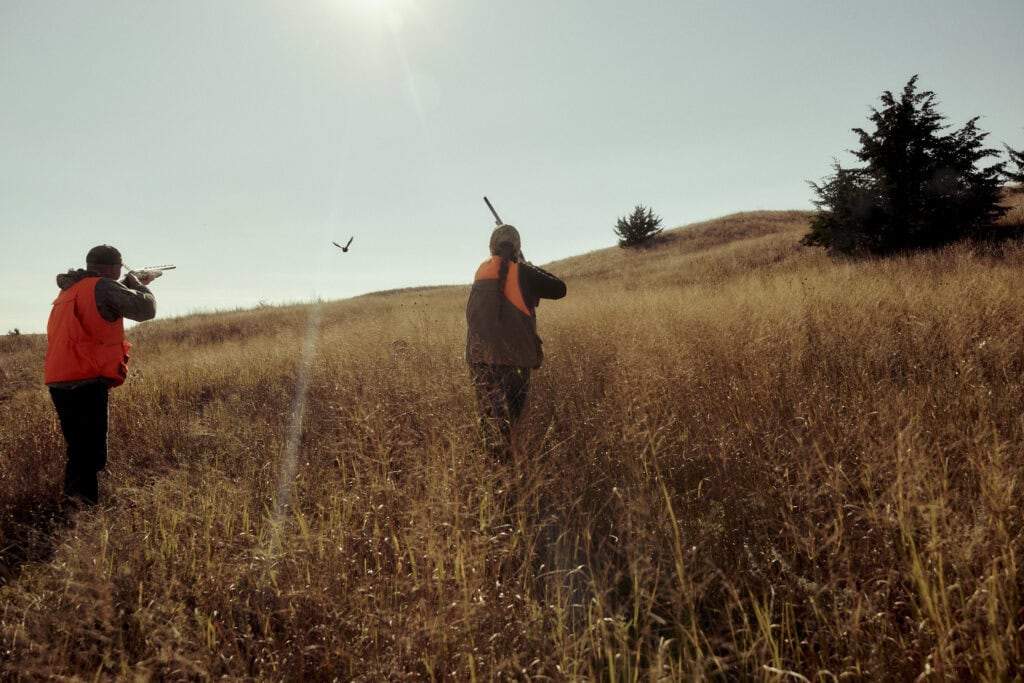
Roosters don’t gently flutter into the sky. They sit dead silent until you’re three feet away, then burst out of the brush like an explosion; the sound startles almost everyone their first time out.
3. Don’t Panic. Just Shoot.
The most common mistake is rushing the shot. The second that bird clears the grass, beginners snap off a shot in a panic and miss entirely. Take a beat. You have roughly three to four seconds to mount the gun stock smoothly to your cheek, trace the bird’s line, swing past its head, and pull the trigger.
4. The Dogs Do the Heavy Lifting.
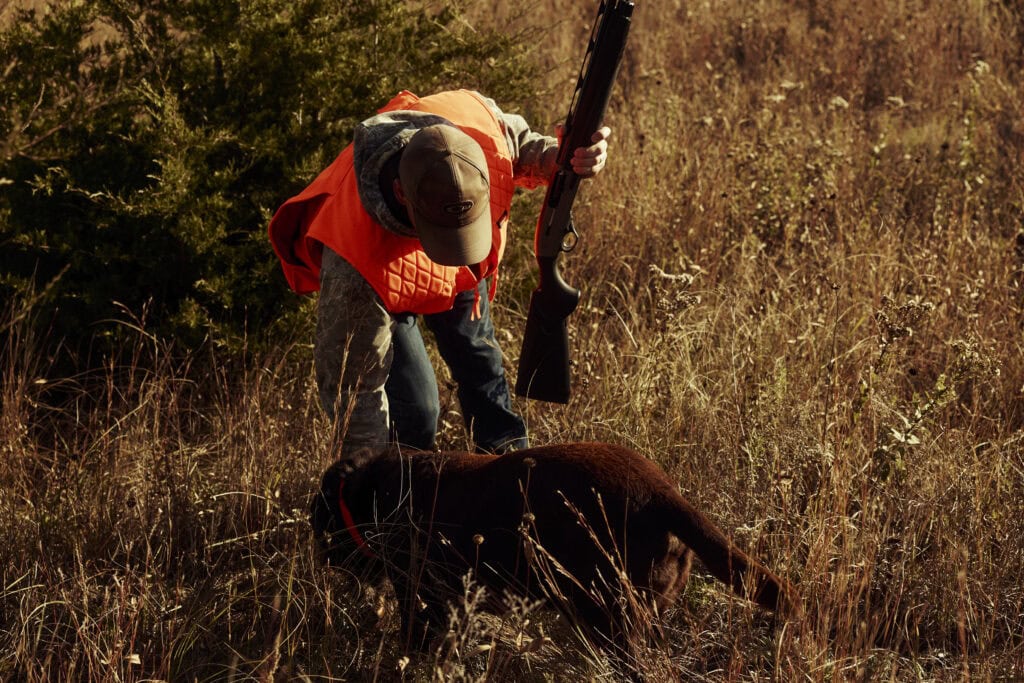
You’re following the dogs. Whether it’s a pointer locking up stiff as a board on a bird’s location, or a lab trailing a running rooster through thick switchgrass, watch their body language. When a dog’s tail starts whipping fast, get ready, because a flush is only seconds away.
Basic Gear: What You Need
Forget over-complicated setups. You need four basic things to stay comfortable and safe:
- Sturdy Boots: High-ankle, waterproof leather or rubber boots. You’ll be walking through uneven terrain, hidden rodent holes, and thick brush all day.
- Brush Pants or Chaps: Regular jeans won’t cut it. Thorns, sandburs, and stiff grass stems will tear plain denim apart in an hour.
- Blaze Orange: A high-visibility orange hat and vest ensure every hunter in the line can pinpoint your location in shoulder-high cover.
- Eye & Ear Protection: Shooting glasses shield your eyes from stray twigs, while earplugs protect your hearing.
Keep your field of vision clear, stay in your assigned sector, trust the guide and dogs, and enjoy the rush when that first rooster takes off.
